 Youth Eco Care
A working landscape can also be a breeding landscape.
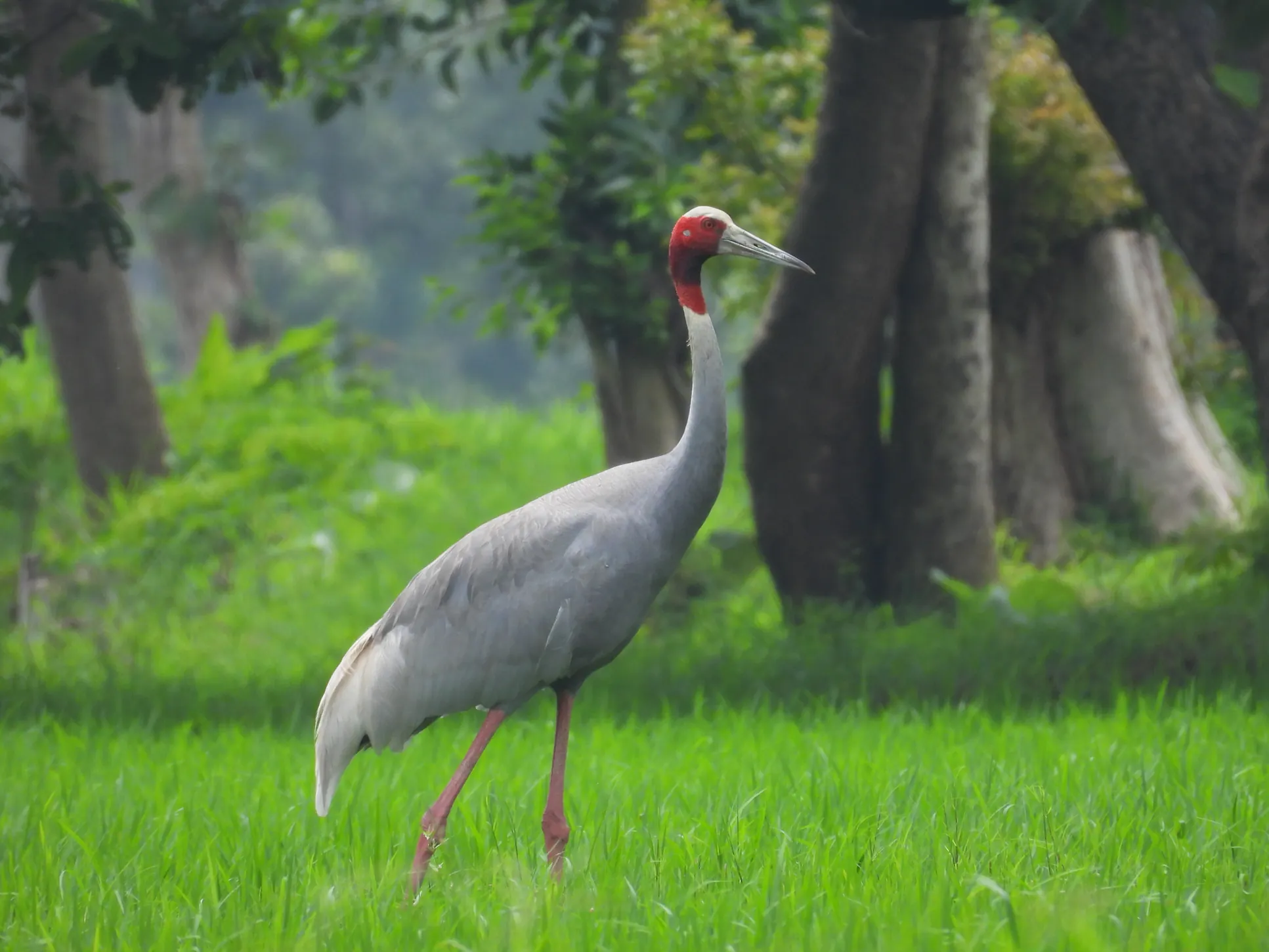
Across parts of India, Sarus Cranes use wetlands and flooded agricultural land. Paddy fields may become nesting sites, bringing their breeding cycle into close contact with farming.
For farmers, fields provide livelihood and food. For cranes, waterlogged fields may offer nesting conditions. Both realities matter, and neither should be reduced to a simple conservation slogan.
What conservation asks of us
Careful monitoring and collaboration can help people understand where disturbance risks arise. Any nest-related intervention should be undertaken responsibly and in coordination with relevant authorities, without publicly disclosing sensitive nest locations.
The Sarus Crane is assessed as Vulnerable globally. Its conservation requires attention to habitat conditions as well as the people who share those habitats.